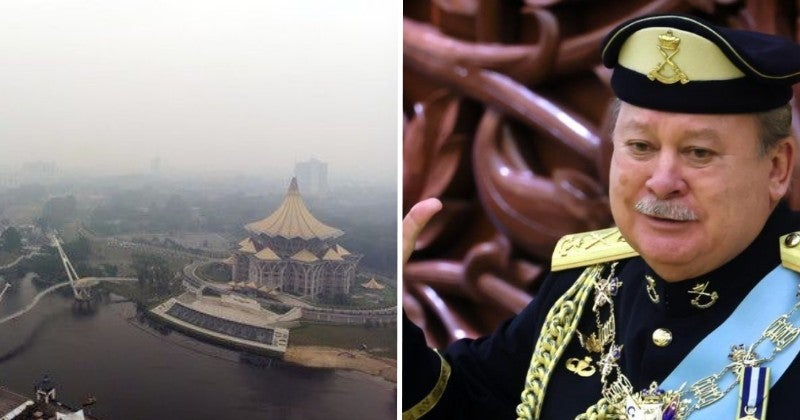
Malaysia could be in for an unusually hot few months, as the El Niño phenomenon is expected to intensify from November this year and could become one of the strongest on record.
According to Berita Harian, climatologist Prof Emeritus Dr Fredolin Tangang said the upcoming El Niño could be as severe as, or even stronger than, the 1997/1998 and 2015/2016 episodes, both of which had significant impacts on weather and climate around the world.

Temperatures in Malaysia could reach up to 40°C, with the most intense heat expected around March and April next year.
El Niño could become ‘very strong’
Speaking to Berita Harian, Fredolin said the latest projections from several international climate forecasting centres indicate that the phenomenon is expected to strengthen significantly over the coming months.
“This development needs to be taken seriously as El Niño is expected to continue strengthening over the next few months before reaching its peak around the end of this year to early 2027,” he said, as quoted by Berita Harian.
The phenomenon is expected to reach its peak around the end of this year and early 2027.
The US National Oceanic and Atmospheric Administration (NOAA) declared on 11 June that the 2026/27 El Niño had begun, after the Niño 3.4 Index rose to 0.7°C, surpassing the threshold for an El Niño event.
Meanwhile, the Asia-Pacific Economic Cooperation Climate Center (APCC) has forecast a more than 90% probability that the phenomenon will reach at least the “strong” El Niño category.
The US Climate Prediction Center (CPC) has also estimated a more than 90% chance that the 2026/27 event could develop into a ‘very strong’ El Niño.
It could trigger drought, forest fires and haze
A particularly concerning scenario would be if the El Niño coincides with a positive Indian Ocean Dipole (IOD), according to Fredolin. The combination could result in drier conditions across parts of Southeast Asia, increasing the risk of drought, forest fires and peatland fires, particularly in Sumatra and Kalimantan.
“If major fires occur in these areas, the smoke can be carried by winds towards the Peninsula, Sarawak, Brunei Darussalam and Singapore, potentially triggering an episode of transboundary haze,” he said.
However, the effects of El Niño are not necessarily the same everywhere.
Interestingly, parts of the Klang Valley have recently experienced increased rainfall, thunderstorms and flash floods despite the developing El Niño. Fredolin explained that the phenomenon can actually contribute to increased rainfall in certain areas and during particular months.

Sabah and Sarawak could be among the areas affected
While the Klang Valley may experience wetter conditions during certain periods, the situation could be considerably different elsewhere. Parts of Sabah and northern Sarawak could face a higher risk of drought, forest fires and haze early next year as the weather becomes drier.
Fredolin also noted that southern Sumatra and Kalimantan are already experiencing significantly drier conditions, with some areas receiving only around 0% to 30% of their usual rainfall this month.
For now, there have been no reports of major forest fires in southern Sumatra and Kalimantan comparable to those seen during the 1997/1998 and 2015/2016 El Niño events.
However, the dry conditions are expected to continue into October, potentially increasing the risk of fires in the coming months.