The National Wages Consultative Council, comprising representatives from both employer groups and trade unions, has officially approved the proposal to raise the national minimum wage from RM1,700 to RM2,000 per month.
First announced by Prime Minister Datuk Seri Anwar Ibrahim during the Budget 2027 presentation, this significant pay bump is set to take effect in June 2027 and is expected to directly benefit over four million workers nationwide.

A staggered approach to help small businesses adjust
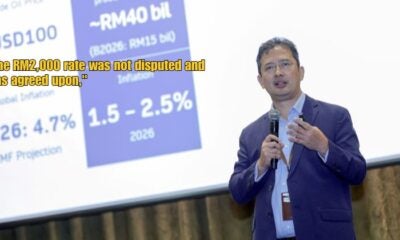
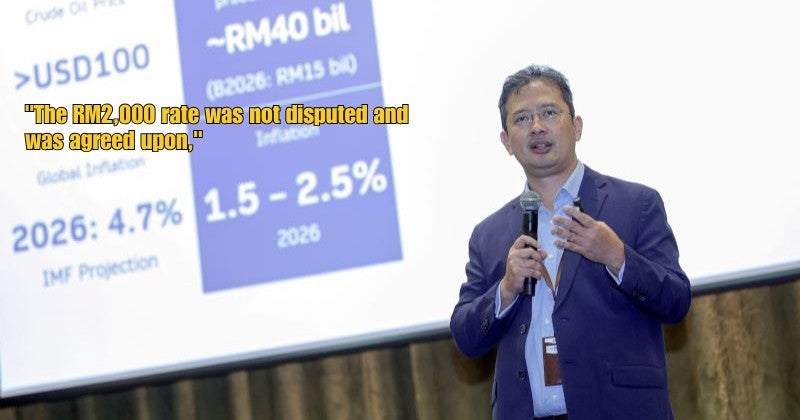
According to Utusan Malaysia, Treasury Secretary-General Tan Sri Johan Mahmood Merican emphasised that the RM2,000 figure was unanimously agreed upon without dispute by council members.
However, the Cabinet decided on a phased rollout to give Micro, Small, and Medium Enterprises (MSMEs) extra breathing room to adjust their business models, especially as many continue navigating global economic challenges.
“Only at the Cabinet level was consideration given to allowing a slightly longer implementation period for micro, small and medium enterprises (MSMEs), so that they could implement it at a later date,” he said at a post-Budget 2027 dialogue session at Lanai Kijang yesterday.
He said the policy would initially be implemented by large companies, as the government understood that MSMEs were also affected by the conflict in West Asia and might need more time to adjust their respective business models.
Johan then explained that the panellists included KPMG Malaysia Tax Policy Adviser Dr Veerinderjeet Singh, IPPFA Sdn Bhd Investment and Economic Strategy Analyst Mohd Sedek Jantan, Small and Medium Enterprises Association of Malaysia (SAMENTA) National President Datuk William Ng, and Khazanah Research Institute (KRI) Director Dr Suraya Ismail.
Tackling wages beyond the baseline
Addressing concerns over living costs, Johan highlighted that rising household expenses stem not just from inflation, but from wage growth failing to keep pace with everyday prices.
“The RM2,000 minimum wage will take effect in June 2027, with implementation beginning with large companies before MSMEs are given time to make adjustments,” he was quoted as saying.
He added that large companies were also expected to review their overall salary structures rather than only raising wages for the lowest-paid employees, to prevent wage compression, where lower-paid workers receive increases but the wages of other employee groups are not adjusted accordingly.
He said the review should also take into account starting salaries for graduates and diploma holders, as well as the RM3,400 living wage benchmark set for government-linked companies (GLCs), which could serve as a reference for the private sector.
What are your thoughts on this? Let us know in the comments!
Also read: Budget 2027: 6 Things M’sians Need to Know, From Cash Aid to Higher Wages