
For most Malaysians, buying a house is by far the biggest financial commitment they will ever make. Staring down decades of loan repayments can make the process deeply intimidating, especially when you are looking at subsale properties.
If navigating the secondary property market feels a bit overwhelming, fret not. With insights from Kuala Lumpur-based law firm ADIL Legal, we’ve compiled a comprehensive guide to help first-time homebuyers through the entire process. Read on to find out more.

For illustration purposes
The three main property markets in Malaysia
Before going any further, it’s best to establish the distinct housing markets in Malaysia to see if the subsale market is right for you.
There are three main housing markets:
- Primary market: Brand-new properties purchased directly from developers, whether under construction or newly completed
- Secondary market (subsale market): Properties purchased from existing owners. This guide will focus solely on this market
- Auction market: Properties that have been foreclosed and repossessed by a bank or court, usually due to the previous owner defaulting on payments

For illustration purposes
Is a subsale property the right choice for you?
Given that this guide focuses on the subsale market, here are the pros and cons of buying from the secondary market to help you decide whether it is the right fit for you:
Pros:
- Immediate availability: No need to wait years for construction to complete
- Price negotiation: Potential room to negotiate the price with the seller
- Inspectable condition: The property is fully built, allowing you to check its actual condition firsthand
- Established neighbourhood: You can evaluate the surroundings, amenities, schools, and even future neighbours before buying
Cons:
- Older properties: May require higher maintenance or repair costs
- Higher entry costs: Requires a standard 10% down payment upfront, along with legal fees, stamp duty, and other miscellaneous costs
- Seller risks: Dealing directly with individual owners can introduce personal or procedural complications
- Renovation needs: Unlike a brand-new property with a blank slate, it may require immediate updating, repairs, or refurnishing

For illustration purposes
How to buy a subsale property in Malaysia
For illustration purposes
Step 1: Find the right property
Of course, the first step in your home-owning journey has got to be finding the right property for you. The subsale market in Malaysia is vast, and you can filter out the best houses by browsing property portals, speaking to property agents, or getting referrals.
Things to consider when selecting a subsale property:
- The location of the property and its neighbourhood
- The market value of the property
- Whether the property is freehold or leasehold (in simple terms, freehold means you own the property indefinitely, while leasehold means you own the property for a set period, but not the land)
- The remaining tenure of the property (for leasehold)
- Monthly maintenance fees (for strata properties such as apartments)

For illustration purposes
Step 2: Negotiate and sign the offer to purchase
Once you find the right subsale property, negotiate the price with the owner. Afterwards, you and the property owner will sign an Offer to Purchase (OTP) agreement. If you are buying the property through an agent, the OTP is usually prepared by the real estate agency.
The OTP should include the following details:
- Purchase price
- Vacant possession terms
- Timeframe to sign the Sale and Purchase Agreement (SPA)
Furthermore, you will need to pay an earnest deposit, typically 3% of the purchase price. However, this amount can vary based on mutual agreement between the buyer and the seller.
Usually, the earnest deposit is held by the real estate agency or a stakeholder lawyer.

For illustration purposes
Step 3: Get loan pre-approval (if needed)
Before you commit to any subsale property, you should get a housing loan pre-approved by the bank. This will give you a clear idea of your borrowing limit, helping you set a realistic budget.
To help with this, you can also use an online mortgage calculator or speak to a mortgage broker.

For illustration purposes
Step 4: Appoint a lawyer (and a valuer if needed)
Next, appoint a licensed conveyancing lawyer to handle the legal process. This includes:
- Conducting title and land searches
- Drafting and reviewing the SPA
- Advising you on costs and risks
If you are taking out a housing loan, the bank will appoint its own lawyer to prepare the loan documents (though in many cases, this can be the same lawyer).
For illustration purposes
Step 5: Sign the SPA
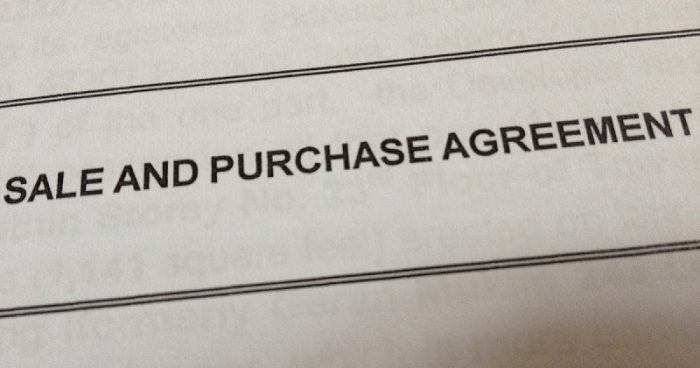
An SPA is the official contract that binds both you and the property seller. Upon signing the SPA, you will need to pay the remaining 7% balance deposit (bringing your total deposit to 10%, inclusive of the 3% paid in Step 2).
For leasehold or strata properties, the SPA may be subject to specific conditions, such as obtaining consent from the state authority (or bodies like LPHS in Selangor) or the developer. Once both parties have signed the SPA, it must be stamped, as outlined in Step 6 below.
For illustration purposes
Step 6: Pay the legal fees and stamp duties
The typical costs for this step include:
- Legal fees: Scale rate under the Solicitors’ Remuneration Order 2023.
- Stamp duty on Memorandum of Transfer (Form 14A): 1% to 3%, depending on the property price.
- Loan agreement stamp duty: 0.5% of the loan amount.
- Disbursements: Search fees, registration fees, application of consent fees, travelling and postage costs, and miscellaneous expenses.
Note that first-time homebuyers may enjoy stamp duty exemptions, so check with your lawyer to see if you qualify.
For illustration purposes only
Step 7: Compliance with conditions precedent (if applicable)
Sometimes, specific conditions must be met before the sale can be finalised; this is known as conditions precedent (CP). These are crucial to ensure that you receive legal ownership free of any issues.
Common CPs include:
- Perfection of Transfer: If the individual or strata title has been issued but remains under the developer’s or previous owner’s name, it must first be transferred to the seller (or directly to you via a direct transfer).
- State Authority Consent: For certain properties (e.g. leasehold or bumiputera lots), consent from the State Authority is required before the transfer can proceed.
- Developer’s Consent: For properties still under a master title (common in subsale transactions), consent from the original developer is usually required.
All CPs must be fulfilled within the timeframe specified in the SPA, which is typically 3 to 6 months.

For illustration purposes
Step 8: Payment of the balance purchase price
Your lawyer will coordinate the payment of the balance purchase price, which is usually due within 3 months (or the timeframe agreed upon in the SPA). This includes your bank loan amount and any differential sum you need to top up (the difference between the loan amount and the purchase price).
Additionally, the Memorandum of Transfer (Form 14A) and Memorandum of Charge (Form 16A) are usually stamped during this stage.

For illustration purposes
Step 9: Filing of RPGT forms (LHDN)
Under the Real Property Gains Tax Act 1976 (RPGT), both buyers and sellers are required to file RPGT declarations (known as Cukai Keuntungan Harta Tanah, or CKHT) when a property transaction takes place. This helps the Inland Revenue Board (LHDN) assess any tax on gains made from the sale.
Note that filing is mandatory for buyers, even if you are not liable to pay any tax. Your lawyer will typically handle this on your behalf.
As the buyer, you must ensure these forms are filed within 60 days of signing the SPA:
- CKHT 2A: Buyer’s declaration of property acquisition.
- CKHT 502 (if applicable): Notification of the retention sum withheld by your lawyer.

For illustration purposes
Step 10: Presentation of documents at the Land Office
Your lawyer will present the following documents to the relevant Land Office to register your name as the legal owner:
- The original title document (along with the floor plan for strata properties)
- Memorandum of Transfer (Form 14A) and Memorandum of Charge (Form 16A, if you took a bank loan)
- The property’s current quit rent and assessment tax receipts
- Clear, coloured copies of the identity cards (MyKad) of both you and the seller
Land Office registration typically takes between one and three weeks to complete.

For illustration purposes
Step 11: Vacant possession and change of ownership
Once the seller receives the full balance purchase price, the final handover takes place:
- Vacant Possession (VP): You will collect the keys, access cards, and car park stickers. (For strata properties, you must also ensure the management office is formally notified of the VP)
- Change of ownership: You are required to update your details with the relevant utility providers and local councils for assessment tax, electricity (TNB), water (Air Selangor/local operator), and sewerage (Indah Water)

For illustration purposes
That’s it! Buying a subsale property in Malaysia can certainly feel like a maze of legal jargon, bank procedures, and paperwork. However, staying organised and keeping track of each milestone makes the journey entirely manageable.
Take your time, do your due diligence, and soon enough, you will be unlocking the door to your very own home.
Stay tuned to WORLD OF BUZZ for more informative articles such as this.
Also read: M’sian Torn as Husband Asks to Use Her Name for House Loan Before Transferring the Property to Him