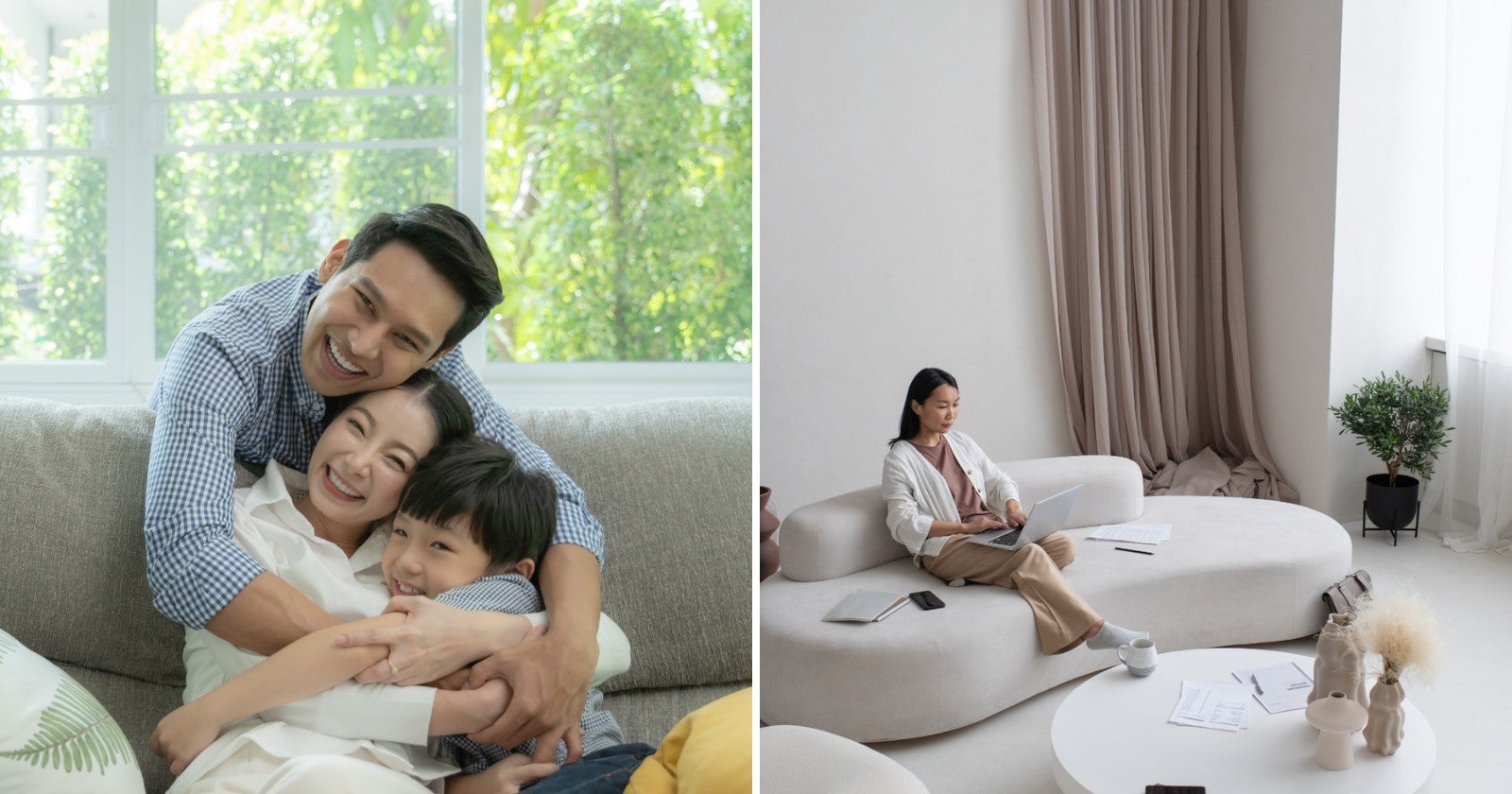
A beautiful home is not necessarily a home with good Feng Shui. Many homeowners spend heavily on furniture, lighting, and renovations, yet overlook one question: Does the layout truly support the people living there? In Chinese Metaphysics, we are currently in Period 9 (2024–2043), associated with the Li trigram and Fire element.
Fire symbolises visibility, light, transformation, and recognition. But that doesn’t mean every room needs red decorations or costly ornaments. “Good Feng Shui is not about filling your home with lucky objects. It begins with understanding how people, furniture, space, and direction interact,” says Malaysia-based educator Master Suyenlim Lim. From brighter entrances to smarter furniture placement, these eight practical ideas can help homeowners create a more balanced and welcoming space.
1. Keep your entrance bright and clutter-free
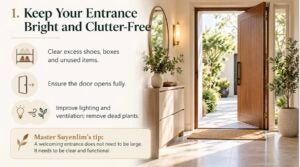
The entrance is traditionally called the mouth of Qi. An overcrowded doorway can also make daily movement inconvenient and the home feel unwelcoming. To avoid this, you can:
- Clear excess shoes, boxes, and unused items.
- Ensure the door opens fully.
- Improve lighting and ventilation; remove dead plants.
Master Suyenlim’s tip: A welcoming entrance does not need to be large. It needs to be clear and functional.
2. Add healthy greenery where it can thrive

In the study of Five Elements, East and Southeast correspond to Wood, which nourishes Fire. Greenery also softens a room visually.
- Consider plants in East or Southeast if conditions suit them.
- Choose species that tolerate the actual light and humidity.
- Remove yellow leaves and prevent waterlogged soil.
Master Suyenlim’s tip: A healthy, well-positioned plant is preferable to an expensive one that cannot thrive.
3. Choose furniture shapes that support movement
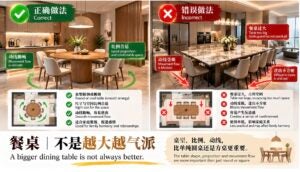
A coffee table can look wonderful in a showroom yet obstruct circulation at home. Rounded corners can be helpful in tight, busy spaces, but no single shape is universally auspicious.
- Check the space around tables and seating.
- Avoid sharp projections into main walkways.
- Match furniture scale to room dimensions.
Master Suyenlim’s tip: The best shape is the one that fits the people and the room.
4. Understand the North Sector before adding water

North is traditionally associated with Water. But adding a fountain there is not a universal Period 9 remedy; water placement depends on a property’s individual Feng Shui assessment.
- Keep the North area clean and maintained.
- Check for leaks, dampness, and drainage issues.
- Seek advice before installing active water features.
Master Suyenlim’s tip: Water is symbolically linked with wealth, but location and timing matter.
5. Declutter the centre of your home
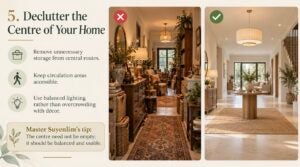
The centre, or Zhong Gong, is an important reference point in classical Feng Shui. In practical terms, congestion there can disrupt movement and spatial comfort.
- Remove unnecessary storage from central routes.
- Keep circulation areas accessible.
- Use balanced lighting rather than overcrowding with décor.
Master Suyenlim’s tip: The centre need not be empty; it should be balanced and usable.
6. Understand lucky numbers before using them
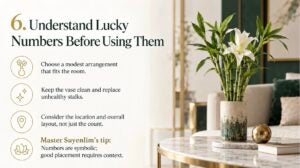
Four is associated with the Four Green Star and nine with the Nine Purple Star. Lucky bamboo arrangements sometimes use these numbers, but a number alone does not guarantee good Feng Shui.
- Choose a modest arrangement that fits the room.
- Keep the vase clean and replace unhealthy stalks.
- Consider the location and overall layout, not just the count.
Master Suyenlim’s tip: Numbers are symbolic; good placement requires context.
7. Repair what is broken
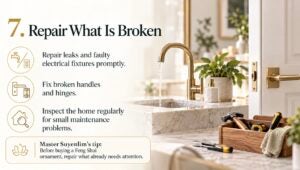
Leaking taps, flickering bulbs, and damaged cabinet doors can affect safety, comfort, and maintenance costs. Feng Shui traditions also associate neglect with stagnation.
- Repair leaks and faulty electrical fixtures promptly.
- Fix broken handles and hinges.
- Inspect the home regularly for small maintenance problems.
Master Suyenlim’s tip: Before buying a Feng Shui ornament, repair what already needs attention.
8. Give your sofa and desk a comfortable view

Ming Tang, or Bright Hall, refers to an open area in front of an important position. In everyday design, visibility, support, and circulation also matter.
- Give the main sofa stable support where practical.
- Avoid blocking entrances and busy walkways.
- Place desks for comfortable sightlines and adequate light.
Master Suyenlim’s tip: Before buying a sofa or king-size bed, decide where it should go.
Period 9: Why one formula does not fit every home
Two homes may have similar furniture and floor plans, but traditional Feng Shui interpretations may differ according to orientation, surroundings and timing. Master Suyenlim encourages homeowners to consider four connected factors: Furniture, People, Space and Direction.
A home regarded as favourable during Period 8 (2004–2023) may warrant reassessment in Period 9. That does not mean every home becomes unlucky. Traditional metaphysical interpretations should also be distinguished from scientifically established effects of ventilation, lighting, ergonomics, and maintenance.
Your home deserves more than beautiful furniture

Creating a comfortable home does not always require major renovations. It may begin with a clearer entrance, a better bed position, a repaired fixture, or more thoughtful furniture placement.
“Before buying furniture, understand your space. Before renovating your home, understand its Feng Shui.” — Master Suyenlim Lim.
Claim your free e-book now
Master Suyenlim Lim has a FREE e-book featuring 8 Feng Shui tips to help you attract good luck, invite prosperity, and create a more harmonious home. Scan the QR code below to claim your copy and discover how you can bring more positive energy into your living space.
8 Feng Shui Tips To Usher Luck & Prosperity To Your Home《⼋个居家⻛⽔秘诀》帮助你布局获得好运.

For more Feng Shui tips, visit Master Suyenlim Lim’s website.
Also read: Feng Shui Finance? Here Are 5 Interesting Beliefs Some M’sians Have To Help Them Get More Money!