A local headhunter recently took to LinkedIn to urge job applicants not to “manipulate” their payslips for job interviews.
“Your last drawn (amount) is RM2,500, but you changed your payslip to a salary of RM3,500 while demanding RM4,000. You cheat on your payslips, but you forget to change the EPF contribution amount. Please be honest with recruiters or anyone you’re applying for job opportunities with,” they wrote.
“This is a practice from the olden days”
Having read the headhunter’s post, a CEO from the oil and gas industry decided to share his two cents on the matter.
The CEO, Mr Ikhwan Sunoto, who is also an advocate for ethical business practices, took to his own LinkedIn account to share a screenshot of the headhunter’s post while condemning them for championing dishonourable practices, as payslips from past roles should not even be asked for or considered.
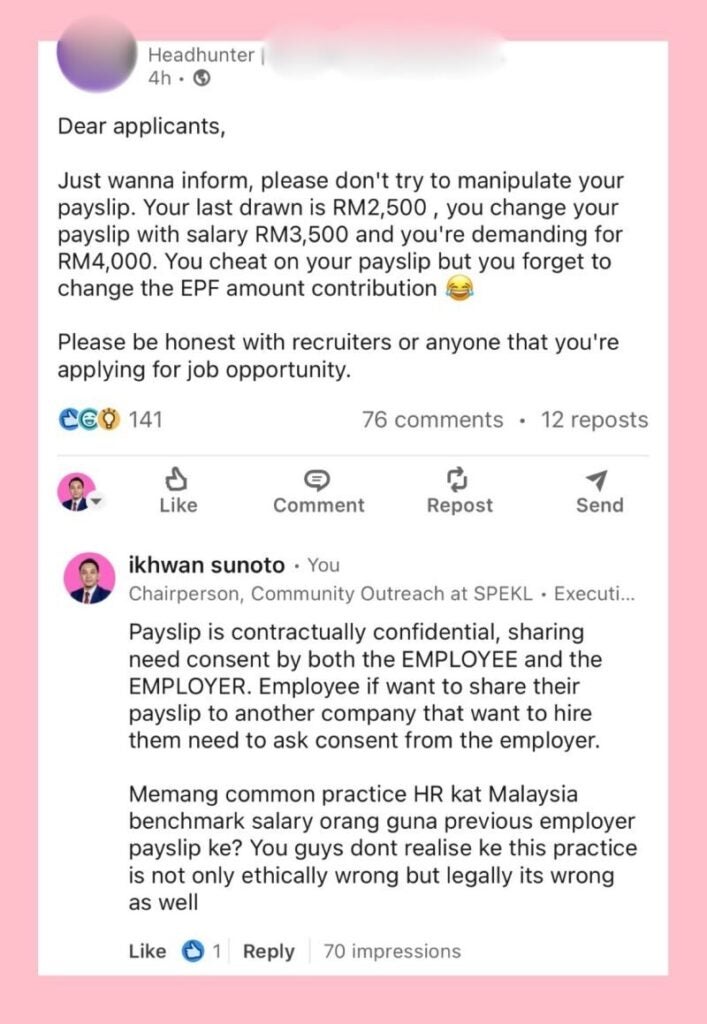
He wrote, “If even HR personnel are not ethical, what MORE can we expect from the company? Today, I was shocked. I was shocked as I read this post. I was shocked that this was posted publicly to LinkedIn.”
“It’s an open secret in Malaysia that HR, recruiters, and headhunters will solicit your PAYSLIP to determine your compensation package. This is a practice from the olden days, and unfortunately, it’s still being practised in some organisations today.”
He labelled such practices as “illegal” and “low quality”
He then pointed out that asking for a job applicant’s payslip is considered illegal.
“Many may not know or realise this, but it is actually illegal for an employee to share their payslips with a third party without consent from their current employer. Why? Because employment contracts are legally binding agreements, which cascade down to all related documents transacted between both parties that signed the agreement,”
“This means that – employers and employees both cannot share any documents without the consent of the other party. This depends on the duration of the contract, or if not stipulated in the contract then until the end of the world. And I’m only touching on Contract Law, I haven’t even gone into PDPA (Personal Data Protection Act 2010) yet.”

This image is for illustration purposes only.
He ultimately believes that companies that request payslips from job applicants are not up to proper standards.
“I think this practice should just stop in Malaysia. To me, any HR personnel, recruiter and headhunter who asks for payslips are low quality. Companies that encourage this kind of practice are also of low quality. So let’s stop being low quality,”
“Getting angry at candidates who alter payslips (which is another unethical practice), but HR personnel are also conducting unethical practices. How do you expect an employee to be ethical if HR doesn’t start first?”
“This perpetuates wage inequality”
Speaking to WORLD OF BUZZ, Mr Ikhwan Sunoto explained that he highlighted this systemic issue as it often goes unchallenged.

This image is for illustration purposes only.
“Ethical hiring starts with ethical HR practices. We must move towards transparency and fairness, not outdated, exploitative methods.”
“At its core, ethics in HR is about fairness, respect and upholding trust. When HR personnel request payslips, they’re essentially basing future compensation on your past salary and not on your skills, experience or the value you bring. This perpetuates wage inequality, especially for those who were previously underpaid,” he said.
Mr Ikhwan went on to emphasise that salary information is confidential under most employment contracts.
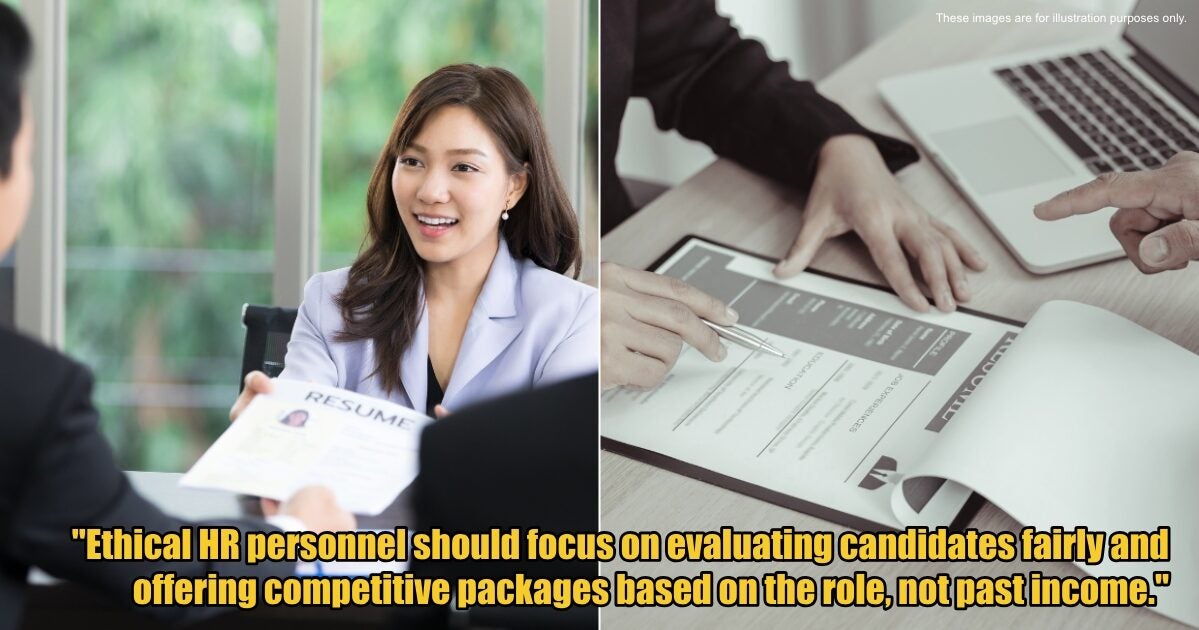
“Sharing or soliciting such documents without mutual consent breaches trust and potentially violates contract law or data protection principles. Ethical HR personnel should focus on evaluating candidates fairly and offering competitive (salary) packages based on the role, not past income,” he added.
What do you think about recruiters and HR personnel requesting payslips during job interviews? Do feel free to share your thoughts in the comment section.
Also read: Is This Legal? M’sian Submits Resignation Letter for 3rd Time After Boss Rejected First Two