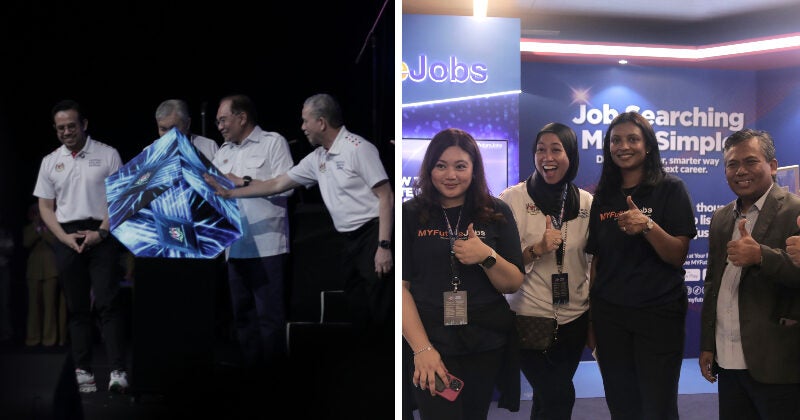
Malaysia’s homegrown job-matching platform, MYFutureJobs, has been hailed as a model for digital employment services across the Organisation of Islamic Cooperation (OIC) member countries.
Human Resources Minister Steven Sim Chee Keong described MYFutureJobs as a key driver of Malaysia’s employment strategy under the custodianship of the ministry.
He noted that the platform has significantly improved job placement rates through real-time data, labour market analytics, and AI-powered matching.
“Between January and May this year, MYFutureJobs recorded 111,459 registered job seekers, over 633,000 job vacancies advertised and more than 74,000 individuals placed into employment.”
“The platform’s integration of artificial intelligence has made it more responsive to both job seekers and employers, enhancing efficiency and reach.”
“MYFutureJobs is not just a portal; instead, it is a national tool to bridge skills gaps, enable career mobility, and future-proof our workforce,” he said in his keynote address at the OIC Workshop on Empowering Job Seekers: Digital Platform Best Practices.
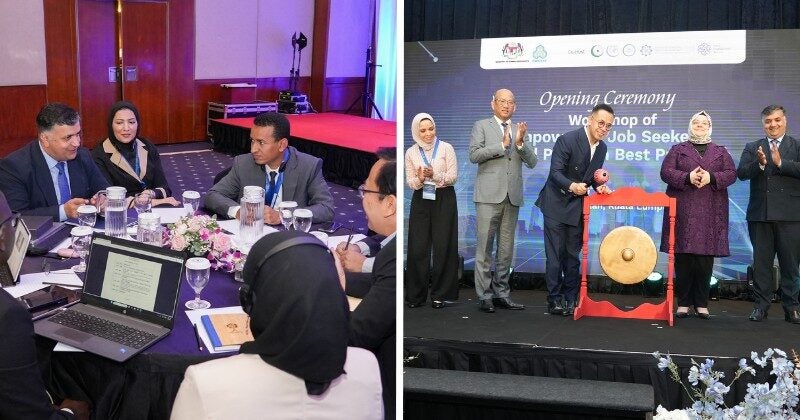
The platform was the highlight of the OIC Workshop, hosted by the Social Security Organisation (PERKESO) in collaboration with the Statistical, Economic and Social Research and Training Centre for Islamic Countries (SESRIC) and the Azerbaijan Public Employment Agency (APEA), under the Organisation of Islamic Cooperation Public Employment Services Network (OIC PESNET).
Also present were PERKESO Board Chairman, Dato’ Sri Subahan Kamal and PERKESO Group Chief Executive Officer, Dato’ Sri Dr Mohammed Azman Aziz Mohammed, together with delegates from across the OIC region.
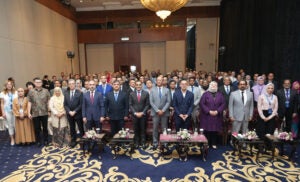
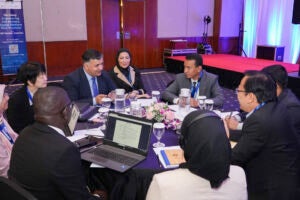
Held over two days at the Royale Chulan Hotel, the workshop drew the public employment service leaders from OIC Member States to explore digital innovations in labour market solutions.
The workshop comes at a critical juncture, as many OIC countries grapple with youth unemployment, skills mismatches, and low female workforce participation, compounded by global inflation and protectionist economic policies.
Key discussions during the workshop include AI-powered career guidance, the evolution of job portal technologies, and combating online job scams through joint government–private sector strategies.
The theme aligns with the OIC PESNET Work Plan 2024–2026, which aims to build resilient and future-ready labour markets through digital transformation and knowledge-sharing among member states.
Steven Sim also shared that MYFutureJobs has been instrumental in identifying emerging and declining jobs by utilising the big data analytics key feature within the platform.
“The findings reflect a global employment shift, with traditional roles such as data entry, clerical tasks and assembly-line jobs gradually being phased out due to automation.”
“At the same time, new job growth is accelerating in areas such as AI, data analysis, cybersecurity, green technology, and healthcare.”
“Therefore, the services and initiatives, including tools for building competencies and skills such as the Career Bridge and Career Exploration Programs (CEP), are all designed to improve
understanding of the labour market,” he said.
He said that PERKESO is actively supporting workers through this transition by using MYFutureJobs to deliver targeted reskilling and career guidance aligned with future-ready sectors.
Steven Sim noted that these efforts have led to a reduction in the unemployment rate to 3.1 per cent for the first time and 34.3 per cent improvement in the underemployment rate.

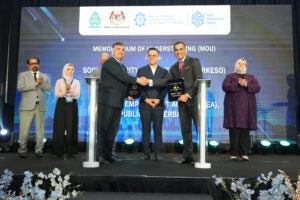
Further underscoring MYFutureJobs’ regional leadership, PERKESO also formalised partnerships with the State Employment Agency (SEA) of Azerbaijan and Türkiye’s Employment Agency (İŞKUR) during the event. The signed Memoranda of Understanding (MoU) aim to strengthen knowledge-sharing, foster technical collaboration and position MYFutureJobs as a model for digital job-matching innovation.