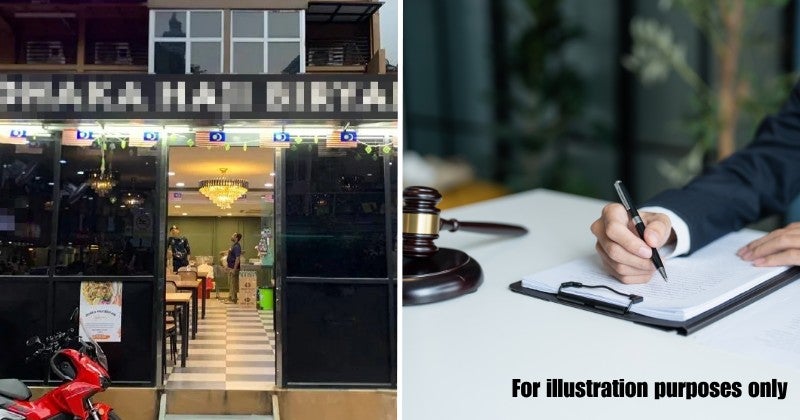
Social media recently went into a frenzy after a viral video emerged highlighting a nasi briyani restaurant along Jalan Bendahara in Bukit Bintang, Kuala Lumpur.
The video raised eyebrows after it claimed that the eatery was owned and operated by Bangladeshi nationals, while also questioning how the establishment was allowed to build a structure directly over a parking lot without enforcement action being taken.
The claims quickly caught the attention of netizens, with many questioning whether the restaurant had obtained the necessary approvals and licences to operate at the location.
Premises is actually owned by a Malaysian
Following the widespread public concern, Kuala Lumpur City Hall (DBKL) stepped in to inspect the premises. However, the inspection found that one of the major claims circulating online was not accurate.
According to DBKL, the restaurant is actually owned by a Malaysian citizen and holds a valid business licence.
“Investigation results found that the premises is owned by a Malaysian and possesses a valid business licence,” DBKL stated in an official release.
So, while the viral claim about the restaurant being owned by Bangladeshi nationals turned out to be false, the inspection did uncover several other issues at the premises.
Restaurant found employing illegal foreign workers
According to Harian Metro, DBKL enforcement officers reportedly found during the inspection that the restaurant had employed foreign workers who lacked valid work permits.
The authorities also found that the business licence was not properly displayed at the premises, despite the restaurant holding a valid licence.
But that wasn’t the only issue discovered during the inspection. DBKL also found that the restaurant had constructed a front extension to the premises without obtaining the necessary approval from the local authority.
The unauthorised structure appears to be the subject of concern raised in the original viral video, although the enforcement action was based on the relevant licensing and local government regulations.

Two compounds issued
Following the findings, DBKL issued two compound notices to the business owner for the offences. The compounds were issued under Section 107(5) of the Local Government Act 1976 and By-Law 22(1)(b) of the Licensing of Food Establishments (WPKL) By-Laws 2016.