
People
Remembering A. Samad Said: 5 Things You May Not Know About Malaysia’s National Laureate And His Literary Legacy

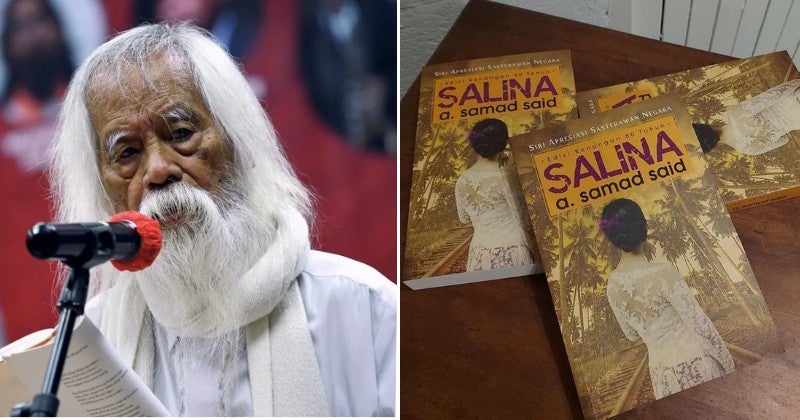
Following the passing of National Laureate Datuk Seri Dr A. Samad Said, affectionately known as Pak Samad, Malaysians are remembering one of the country’s most influential literary figures.
Pak Samad passed away on 24 November 2026 at the age of 91, with his passing confirmed by his son, Helmy Abdul Samad, according to BERNAMA.
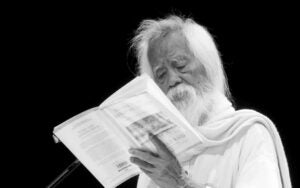
Born in Melaka, he spent decades documenting the experiences, struggles and realities of society through his novels, poetry, short stories and plays. His works, particularly Salina and Sungai Mengalir Lesu, became important contributions to modern Malay literature.
While many Malaysians may recognise his name through these celebrated works, there are several interesting details about the man behind them.
Here are five things you may not know about the life and legacy of Pak Samad:
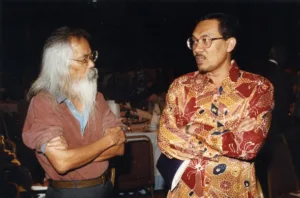
1. He was Malaysia’s fourth National Laureate
Born on 9 April 1935 in Kampung Belimbing Dalam, Durian Tunggal, Melaka, A. Samad Said grew up to become one of the most influential figures in modern Malay literature according to Universiti Teknologi MARA (UiTM),
His contributions eventually earned him the prestigious title of Sasterawan Negara (National Laureate) in 1985, making him the fourth recipient of the honour.
He was 50 years old when he received the recognition, which is awarded to Malaysian literary figures whose works have made significant contributions to national literature.
Pak Samad was recognised for his contributions to the development of modern Malay literature through his novels, poetry and dramatic works.
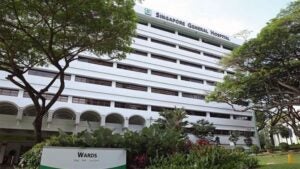
2. He worked as a hospital clerk before becoming a celebrated writer
Before establishing himself as a literary icon, Pak Samad actually began his working life as a clerk at Singapore General Hospital.
According to his official biography documented by Dewan Bahasa dan Pustaka (DBP), he subsequently ventured into journalism, working with several publications, including Fikiran Rakyat, Utusan Zaman and Berita Harian.
His career later saw him take on several editorial responsibilities, including becoming editor-in-chief of Warta Teberau in 1981.
He also served as Head of Literary Development at The New Straits Times newspaper group, before eventually becoming a full-time writer.
His journey from working as a hospital clerk to becoming one of Malaysia’s most celebrated literary figures was certainly an extraordinary one.
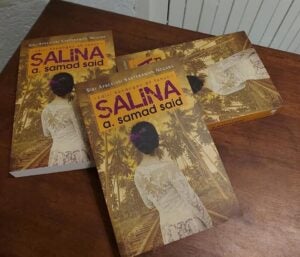
3. His iconic novel Salina was originally titled Gerhana
One of Pak Samad’s most celebrated works, Salina, actually started out with a completely different title.
According to DBP’s official biography, his first novel was originally titled Gerhana and received a consolation award in the organisation’s 1958 novel-writing competition.
The manuscript was subsequently renamed Salina and published in 1961.
The novel went on to become an important work in modern Malay literature, with literary scholars, including prominent Dutch scholar Professor A. Teeuw, recognising its international literary standing.
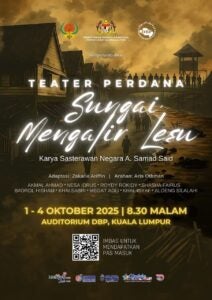
4. His childhood experiences during World War II inspired one of his famous novels
Pak Samad’s writing was often deeply connected to the realities of the society around him, and some of his most memorable works were inspired by experiences from his own childhood.
Having witnessed the suffering caused by the Japanese occupation of Singapore, the experiences left a lasting impression on him while he was still young.
According to DBP’s biography, the suffering experienced by communities during the Japanese occupation had a particularly strong impact on Pak Samad, who was still a child at the time.
These memories later became an important source of inspiration for his novel Sungai Mengalir Lesu, which was published in 1967.
The novel portrays the hardships faced by ordinary people during the Japanese occupation, highlighting how war affected communities struggling to survive amid uncertainty and suffering.
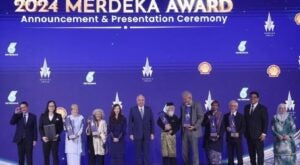
5. His contributions to literature earned him recognition beyond Malaysia
Throughout his decades-long career, Pak Samad received numerous awards recognising his contributions to literature, both in Malaysia and across the wider region according to his official biography by the National Library of Malaysia (PNM).
Among his notable honours were:
- Anugerah Pejuang Sastera (1976): recognising his contributions to literature.
- S.E.A. Write Award (1979): a prestigious literary award recognising writers from Southeast Asia.
- Anugerah Sasterawan Negara (1985): the prestigious National Laureate award.
- Anugerah ASEAN (1993): awarded by Brunei Darussalam in the literary category.
- Anugerah Sasterawan Nusantara (1999): recognising his contributions to literature in the Nusantara region.
His works also reached readers beyond Malaysia through translations into other languages, particularly his celebrated novel Salina.
These achievements reflected the influence of his writing beyond national borders, particularly among readers and literary communities in the wider Malay-speaking world.

As Malaysia remembers Pak Samad, his legacy goes far beyond the awards he received or the books he published.
Through his writing, he documented the experiences of ordinary people and gave generations of readers a deeper understanding of the world around them.
His words and contributions to Malaysian literature will continue to live on through the countless readers and writers who encounter his works in the years to come.
Terima kasih, Pak Samad. Your words and legacy will live on for generations to come.
Also read: Remembering Tun Dr Hasmah: 8 Things You May Not Know About Her And Her Life Of Service To Malaysia




Shaping Tomorrow’s Lawyers: Sunway University Launches Law School With M’sia’s Chief Justice In Attendance
Sunway University has officially inaugurated Sunway Law School, marking a significant milestone in the University’s commitment to advancing legal education,...


One Layer, Two Climates: 5 Ways UNIQLO HEATTECH Suits Both Winter Holidays & Daily Life in M’sia
For many Malaysians, the year-end holidays are a chance to cuti-cuti somewhere colder and trade the tropical heat for a...


Talentbank Career Passport Guides Students From University to Industry Job at 9th Graduates’ Choice Award
The Ministry of Higher Education (KPT), public and private universities, a wide range of business associations and chambers, and Talentbank...

Mum Dies in Perlis Crash on Her Way Home From Work to Buy Ingredients for Son’s Birthday Dinner

Driver Cuts Queue From Wrong Lane to Steal Parking Spot in KL, Gets Shamefully Schooled by Passers-by

“I fell in love with M’sians” – Russian Couple Flies to M’sia for MCR & Simple Plan, Praises Unmatched Concert Vibes

33yo Autistic Woman Nominated for Award After Helping Put Out Fires, Later Arrested for Allegedly Starting Them

AKPS Officer Earns Praise After Reporting Her Own Superior for Allegedly Helping Foreigner Enter M’sia Illegally
-
 News21 hours ago
Mum Dies in Perlis Crash on Her Way Home From Work to Buy Ingredients for Son’s Birthday Dinner
-

 News3 hours ago
MCMC Sues Google for RM300 Million Over Alleged Failure to Remove Papagomo’s YouTube Content
-

 News20 hours ago
PMX Disagrees With MP’s Remarks on Friday Business Closures in Terengganu, Leaves Matter to PDRM
-

 Social Stories21 hours ago
Large Rats Caught Crawling Over & Feasting on Fresh Bean Sprouts During Surprise Hygiene Check at Pasar Pudu