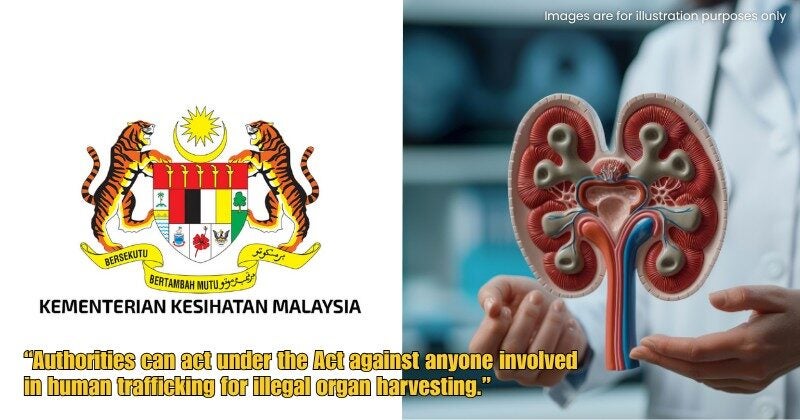
Back in 2023, a Member of Parliament (MP) faced backlash after alleging that some Malaysians were resorting to extreme measures, even selling their kidneys just to get by.

For illustration purposes only
This raised concerns about the severity of economic pressures and the risks involved in such actions. But what consequences could Malaysians face if they choose this path? Here’s the breakdown.
1. But first, what sparked this whole discussion?
Machang MP Wan Ahmad Fayhsal Wan Ahmad Kamal faced backlash after claiming that some Malaysians were selling their kidneys due to financial struggles, linking it to the government’s refusal to allow another Employees’ Provident Fund (EPF) withdrawal.
“If targeted withdrawals are not allowed, what further proposals does the government have to help ease the struggles of the people? There are even those who go as far as selling their kidneys. This is not something to be taken lightly; it’s a serious issue that affects public interest,” he said.
His unproven claim was later heavily criticised by many, including the Ministry of Health Malaysia (MOH), which condemned him and reiterated that it does not support any party involved in illegal or unethical organ procurement activities.

Wan ahmad fayhsal wan ahmad kamal
2. Dr Noor Hisham weighs in on the issue
Former Director-General of Health, Tan Sri Dr Noor Hisham Abdullah, said any cases of human trafficking linked to organ trade must be investigated under the Anti-Trafficking in Persons and Anti-Smuggling of Migrants Act 2007, stressing that such activities exploit vulnerable groups and violate medical ethics.
He added that organ transplants in Malaysia only involve living or deceased donors, with organs given to patients suffering from organ failure, as reported by Berita Harian.
“The authorities can use the provisions under the Act to take action against any party or individual if human trafficking occurs for the purpose of illegal organ harvesting. Organ donation and transplantation services in the country involve donations from both living donors and deceased (cadaveric) donors, with recipients being patients suffering from organ failure, such as kidney, liver, heart, or lung conditions,” he said.

Noor hisham abdullah
3. “Exploiting vulnerable individuals as organ donors must be prohibited”
Speaking to WORLD OF BUZZ, Luqman Mazlan, a partner at Kuala Lumpur-based law firm ADIL Legal, says in Malaysia, the Human Tissues Act 1974 regulates organ procurement for treatment from cadaveric donors.
He also pointed out that Malaysia is a signatory to the 2008 Declaration of Istanbul on Organ Trafficking and Transplant Tourism, which calls for organs to be allocated fairly to recipients regardless of gender, ethnicity, religion, or financial background.
Luqman added that the declaration also stresses that targeting poor and vulnerable individuals as organ donors must be strictly prohibited, as it fuels organ trafficking, transplant tourism, and the commercialisation of transplants.
For illustration purposes only
4. Anyone profiting from exploitation can be fined up to RM10 million
While the Human Tissue Act 1974 governs organ transplants for treatment, medical education, and research purposes in Malaysia, it does not specifically address human organ trafficking.
Instead, Luqman revealed that such offences fall under the Anti-Trafficking in Persons and Anti-Smuggling of Migrants Act 2007 (Act 670), which clearly criminalises organ trade. Under this Act, anyone who profits from the exploitation of a trafficked person can face up to 15 years in prison, fines ranging from RM500,000 to RM1 million, and forfeiture of any profits gained.
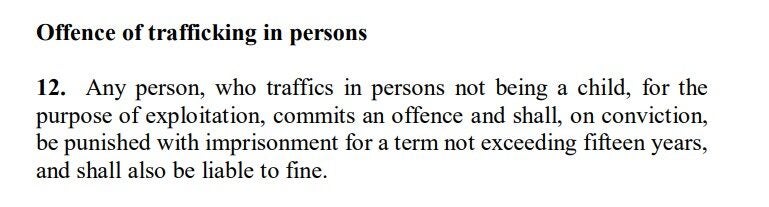
Anti-trafficking in persons and anti-smuggling of migrants act 2007 (act 670)
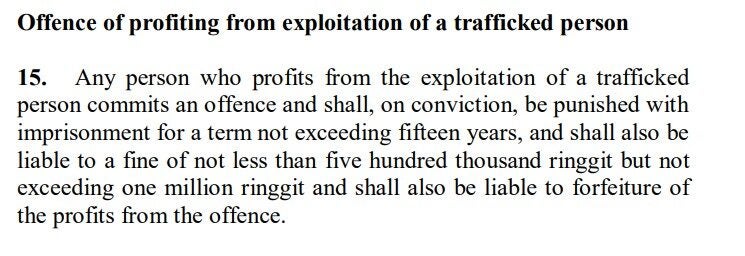
The Act also explicitly includes “the removal of human organs” within its definition of “exploitation”, making it the main legal framework against organ trafficking in the country.

5. What steps were taken to address this?
To tighten oversight of transplant services, the Health Ministry set up a transplant committee to review organ donations involving unrelated donors or non-citizens.
The committee looks at medical, mental, and socioeconomic factors to ensure donors are well-supported and not coerced. Noor Hisham stressed that strong governance is key to protecting donors’ rights and preventing trafficking, adding that the Ministry does not condone illegal or unethical organ procurement and will cooperate fully with investigations.
He also reminded pledged organ donors to let their families know their wishes to support ethical transplantation in Malaysia.

6. The viral story of a Chinese man who gave up his kidney for an iPhone
Recently, a story about a Chinese man came to light after it was revealed that he sold one of his kidneys at just 17 years old to a trafficking syndicate, just so he could get an iPhone.
In 2011, Wang Shangkun went through an illegal surgery and was paid CNY20,000 (~RM12,000 or ~RM9,400 at the time). With that money, he bought himself an Apple iPhone 4 and an iPad 2.
Calling it the “biggest regret of his life,” now, at 31, with his remaining kidney failing and being declared permanently disabled, no amount of money can undo the damage to his health.

Wang shangkun
What are your thoughts on this? Let us know down in the comments!
Also read: Did You Know: Foreign Workers Who Marry a Local Can Be Immediately Deported from Malaysia