Walking alone at night sounds like a pretty bad idea for most people. But if you have to do it, how can you tell how safe you really are?
A recent Gallup poll titled “The Global Safety Report – A Safer World in Unsafe Times?” revealed the safest countries in the world to walk alone at night, with some interesting findings for the Southeast Asia region.
For illustration purposes only
Malaysia is ranked the second least safe ASEAN country to walk alone at night
In the study, Malaysia was ranked 100th out of 150 countries for the safest country to walk alone at night. Regionally, that makes Malaysia the second least safe among ASEAN nations, though do note that data for Brunei was absent from the survey.
Specifically, 58% of respondents said they feel safe walking alone in Malaysia, with only Myanmar ranking lower in 9th (and last) place with 41% among ASEAN nations.
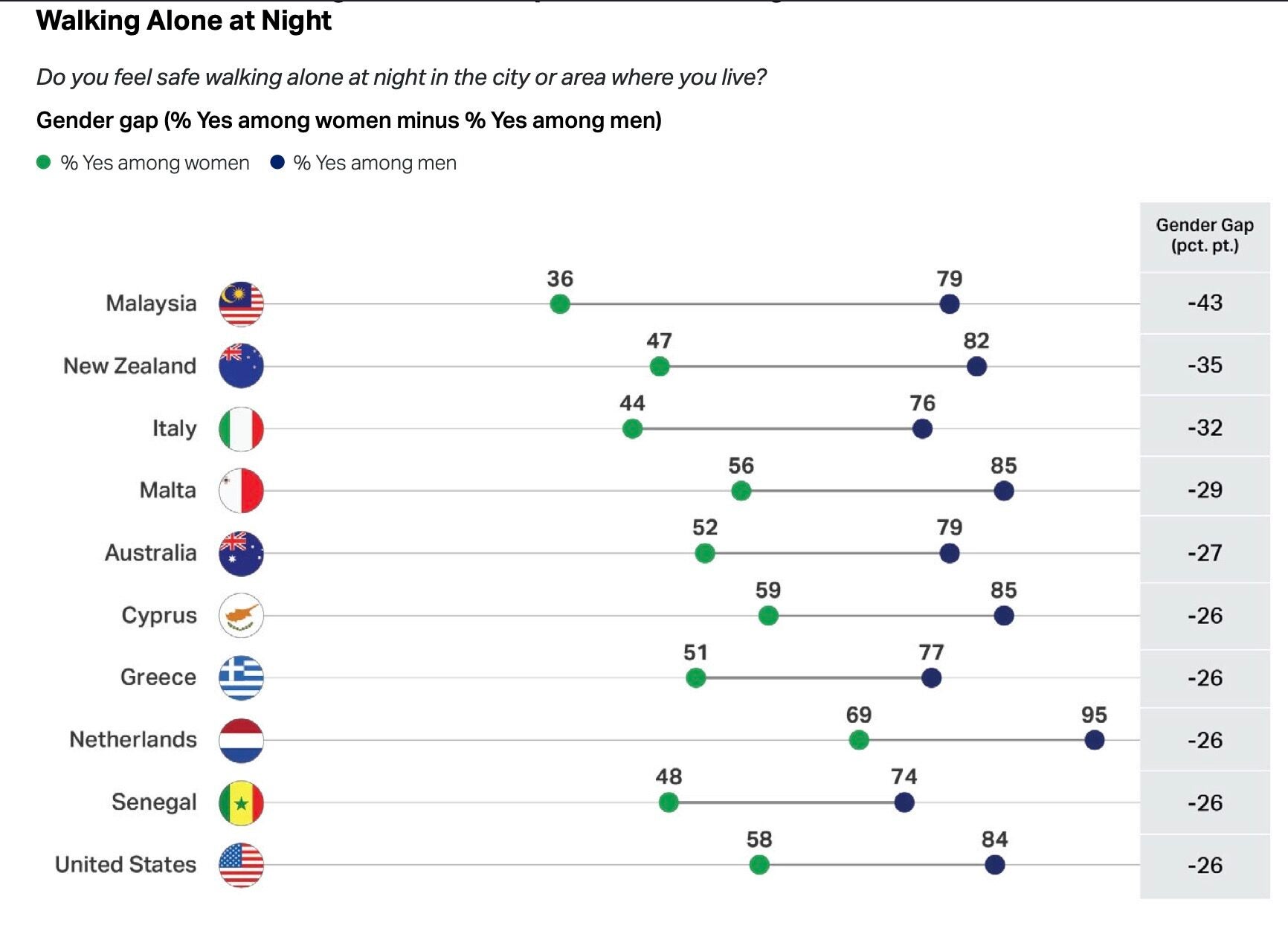
Malaysia is also noteworthy in the survey for being the country with the largest gender gap in the percentage of men and women who feel safe walking alone at night globally.
The survey found that 79% of men feel safe walking alone at night in Malaysia, compared to only 36% of women who feel safe doing so.
Meanwhile, Singapore topped the list, both globally and regionally, with a whopping 98% of respondents saying they feel safe walking alone at night in the island state.
Among ASEAN countries, Vietnam is in second place with 88%, followed by Indonesia in third with 83%.
Other ASEAN countries in the list include Thailand in 4th (70%), the Philippines in 5th (64%), Laos in 6th (63%) and Cambodia in 7th (62%).
“These aren’t just reactions to danger”
In 2024, about 73% of adults worldwide told Gallup they feel safe walking alone at night where they live.
Even in times of conflict, people still find ways to feel secure, through neighbours they trust, institutions they rely on, and daily habits that keep them grounded.
“These aren’t just reactions to danger, but the foundations that make lasting peace possible. How safe people feel isn’t just a reflection of peace; it’s what makes peace possible,” the report stated.
The findings were based on nationally representative surveys of adults aged 15 and above in 144 countries and territories, with around 1,000 or more respondents in each. The surveys were conducted either by phone or face-to-face in 2024.
What are your thoughts on this? Let us know down in the comments!