According to the Julius Baer Global Wealth and Lifestyle Report 2025, the most expensive city in the world for high-net-worth individuals (HNWIs) to live well is (still) Singapore.
ICYMI, Singapore also topped the list in both 2023 and 2024, while Shanghai held the title in 2021 and 2022.
Top 10 in the world
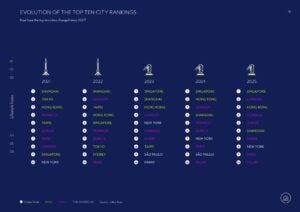
According to the report, London, which moved up a spot, came in second, followed by Hong Kong, which slipped to third. The complete list of the top 10 most expensive cities in the world is as follows:
- Singapore
- London
- Hong Kong
- Monaco
- Zurich
- Shanghai
- Dubai
- New York
- Paris
- Milan
The report also highlighted that despite Singapore’s top ranking, the average price increase in the country was marginal, at just 0.2% in the local currency.
That said, however, several key items did see significant price hikes, such as:
- Business class flights: Up 17%
- Private school fees: Up 12.1%
- Hotel suites: Up 10.3%
On top of that, Singapore is also noted as being the most expensive city to own a car or women’s handbags.
Why Singapore remains appealing
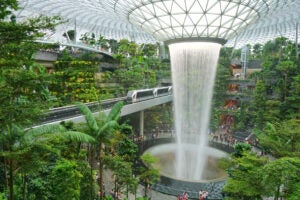
For illustration purposes only
Despite the high costs, the report emphasises that the appeal to live in Singapore continues undimmed.
Some of the reasons provided include:
- Security & stability: The city is valued for its stable political situation and safe environment
- High-quality services: Specifically, education and medical care benefits
- Global connectivity: It serves as a major global transport hub
100% of HNWIs in Asia Pacific are taking steps to improve longevity

For illustration purposes only
With two of the top three cities being in the Asia Pacific (APAC), the APAC region experienced the smallest average price decrease of all regions in the past year.
On top of that, HNWIs in APAC tended to increase both their spending and their investing over the last year. In total, 68% increased their investing.
What’s more, a remarkable 100% of HNWIs surveyed in APAC are actively taking steps to improve their longevity, with 21% using gene therapy or cryogenic chambers.
The wealthy in APAC also have a high appetite for both experiential spending (like travel) and material goods.
Methodology
The report’s methodology is based on two main components: the Lifestyle Index (a comparison of the cost of a specific “basket” of goods and services across 25 major cities worldwide) and the Lifestyle Survey (to understand the habits, priorities, and financial attitudes of wealthy individuals).
For the Lifestyle Index, the basket includes 11 consumer goods and 9 services that represent discretionary spending by HNWIs. To calculate final rankings, prices are weighted with residential property accounting for 20%, and cars for 10% of the total index weight. The other 18 items make up the remaining 70%. The data was collected by Ipsos from November 2024 to March 2025.
As for the Lifestyle Survey, 360 HNWIs with bankable household assets of USD 1 million or more were interviewed, and the survey was conducted between February and March 2025.
What do you think about this survey? Let us know down in the comments!