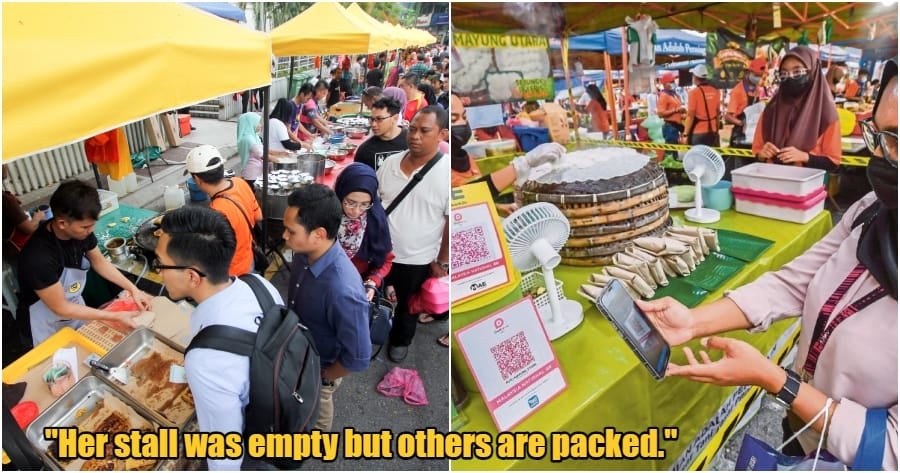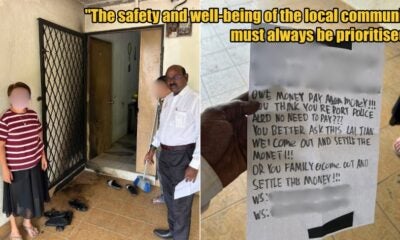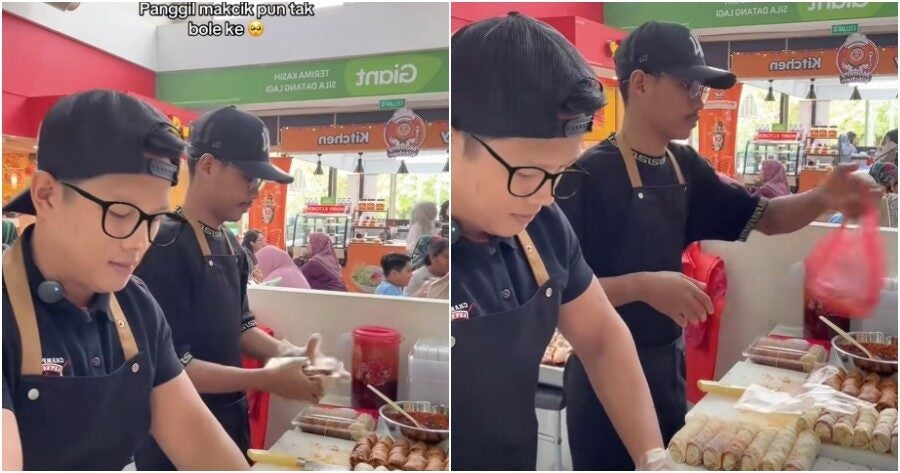
A Malaysian woman, who was also a customer at a food stall in Shah Alam, recently reminded the young vendors about the proper way to address customers.
In a viral video, the woman politely reminded the young popiah vendors to address customers as Puan (Madam), or Tuan (Sir). The reminder came when one of the vendors addressed the woman as Mak Cik (Aunty).
The vendors accepted her advice and did not retaliate. Both continued to smile and acknowledged the friendly reminder while preparing her snacks.
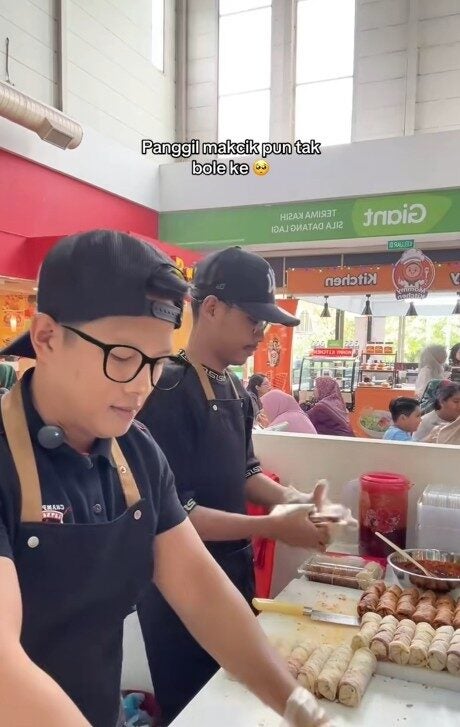
Yes, as Malaysians, we are used to addressing strangers casually, such as Encik (Mr.), adik or abang, (brother, depending on the man’s age), Kak (Sister), and for the elderly, we often get their attention by calling them Pak Cik or Mak Cik (Aunty or Uncle) but are these acceptable?
According to an Instagram post by Public Health Malaysia, it all depends on the situation. In most cases, there is nothing wrong with being casual.
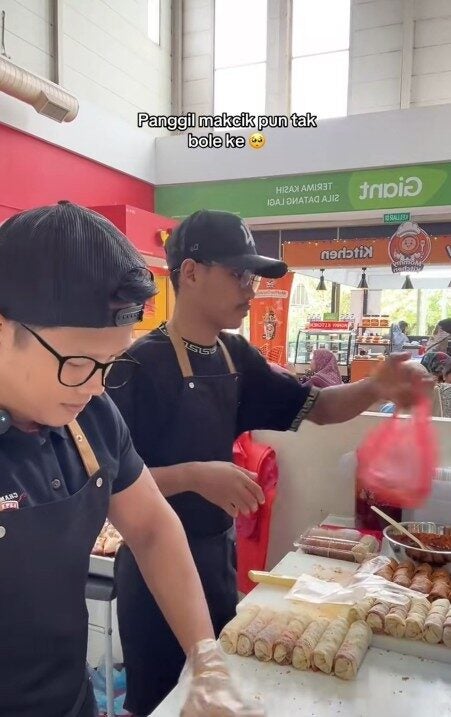
However, when the occasion calls for us to be formal, it’s best to address others as Tuan or Puan out of formality, but when the other party expresses discomfort, we can change how we address the person.
What do social media users think of this situation?
Following the circulation of the video, netizens were divided on the matter, with some saying that the young vendors should be grateful and accept the customer’s friendly feedback and reminders.
They agreed that in the customer service line of work, Tuan and Puan are the best ways to address customers.
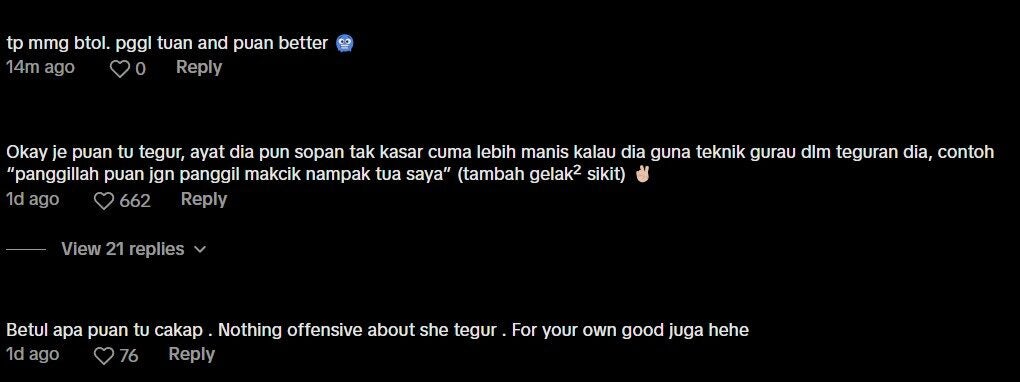
“She was polite when reminding the vendors, but would’ve been better if she had some sense of humour and laughed a little, perhaps by saying not to call her Mak Cik or she would look old.”
“Nothing offensive about that. It’s for your own good.”

On the other hand, some social media users thought that there was no need to be so formal, especially in simple situations, and they were baffled as to how “Mak Cik” could be seen as impolite.

“It’s just Popiah, not fine dining. If you’re around the age of a Mak Cik, you are a Mak Cik. If you want to be formal, it depends on the situation.”
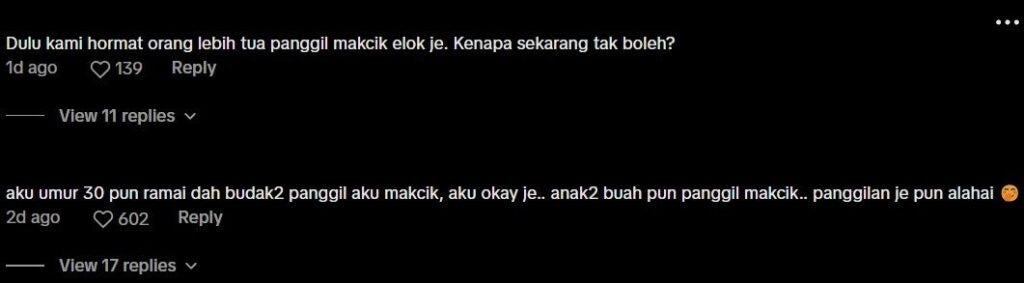
“We used to call the elderly Mak Cik as a sign of respect. Why is it a problem today?”
“I am 30 and kids are calling me Mak Cik, but I am fine with it.”
How do you usually address people who are older than you?